
Beyond Reform: How To Make Tinubu's Economic Gains Work for Nigerians
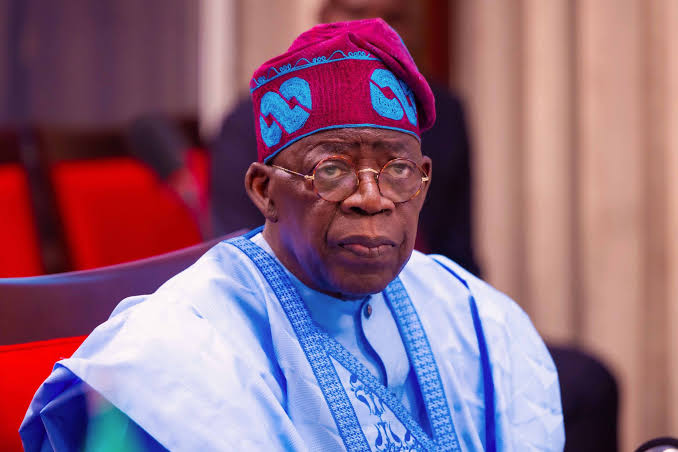
After three years of bold but painful economic reforms, Nigeria has reached an inflection point. President Bola Ahmed Tinubu's administration has taken the tough decisions, fuel subsidy removal, exchange rate unification, and aggressive revenue mobilisation and on paper, it has worked. Macroeconomic indicators have stabilised.
But on the streets, the question dominating policy circles has shifted from what was reformed to who is benefiting. That is why most economic analysts strongly believe that President Tinubu's next economic battle is about people, not policies.
Household purchasing power remains under severe pressure. Small businesses are squeezed. Productivity is lagging.
Transforming reforms into inclusive growth, analysts say, will require targeted action across four pillars, protecting households, sustaining MSMEs, unlocking productivity, and attracting productive investment.
According to Olusegun Zaccheaus, Partner, Chief Economist and Lead, Strategy & Economics, West Africa at PwC, data shows why the shift from stabilisation to inclusion is now urgent.
"As of June 2026, food inflation stood at 17.52%, the cost of a healthy diet was N1,589 per adult per day, poverty is projected at 63%, and undernourishment at 19.9%. Diesel, PMS, kerosene and LPG prices have all recorded significant year-on-year increases, squeezing both household budgets and transport costs," Zaccheaus said.
Without deliberate intervention, he warned, the social cost of reforms could undermine the reforms themselves.
The first priority, according to Zaccheaus, is to scale up targeted household support to protect purchasing power. This means reducing food costs through higher farm productivity, better storage and logistics, and expanding domestic energy supply to ease household and transport costs.
Dr. Muda Yusuf, economist and CEO of the Centre for the Promotion of Private Enterprise (CPPE), said the framework captures the reality on the ground.
"Reforms are necessary but not sufficient. What we have done is correct price distortions. What we now need to do is protect people through that transition. The N1,589 per day for a healthy diet shows food is still out of reach for many," Yusuf noted.
"Targeted cash transfers, yes, but more importantly, we must fix storage and logistics to crash food prices. That is the fastest way to reduce poverty."
Micro, Small and Medium Enterprises (MSMEs) employ over 80% of Nigerians but face a crippling financing gap. Private-sector credit stands at only 21.3% of GDP, far below the 33.0% Sub-Saharan African average.
Industry watchers recommend closing the financing gap through targeted credit windows, guarantees and blended finance. They also urge government to reduce key operating constraints insecurity, multiple taxation, high interest rates and bank charges.
Matilda Adefalujo, Investment Associate at Meristem Research, said the credit numbers tell the whole story.
"The 21.3% private credit to GDP ratio tells you everything. Banks are not lending to small businesses. We need development finance windows that are deliberate 7 to 10-year tenor, single-digit interest, with partial guarantees. If we don't fund these businesses, we won't create jobs."
Nigeria ranked 70th on the IMD infrastructure pillar in 2026, a stark reminder of the productivity drag.
Analysts prioritise power, transport, broadband and security interventions. They calls for capturing near-term electricity gains through faster metering, stronger collections and lower losses, with a 5.06 million metering gap and 37.44% ATC&C losses still plaguing the sector, it stresses building workforce productivity through education, foundational learning and school to work pathways.
Professor, Ken Ife, a prominent Nigerian-British development economist and public policy analyst, said productivity must now be treated as an emergency.
"You cannot have inclusive growth with 5 million unmetered homes and 37% ATC&C losses. Power is productivity. Broadband is productivity. Security is productivity. The IMD ranking of 70th should worry us. The government must treat power, transport and broadband as emergency interventions."
Finally, to build a stronger pipeline of bankable projects that create capacity and jobs, Professor Ife says Nigeria must improve FDI conversion by reducing approval delays, strengthening regulatory predictability and protecting investors from abrupt policy changes.
He also calls for accelerating project execution by addressing approval, land, financing and forego exchange bottlenecks that delay investment from becoming operating assets, infrastructure and jobs.
The consensus among experts is clear, stabilisation has been achieved. The next chapter must be about making those tough decisions work for the average Nigerian household, so that the market woman in Onitsha, the factory in Ogun, and the young graduates in Kaduna will feel its impact.